House mouse
Mus musculus
House mice seek food and shelter in homes and commercial premises. Look beyond the animal itself: droppings, gnawed packaging and gaps around pipes can help identify the cause.
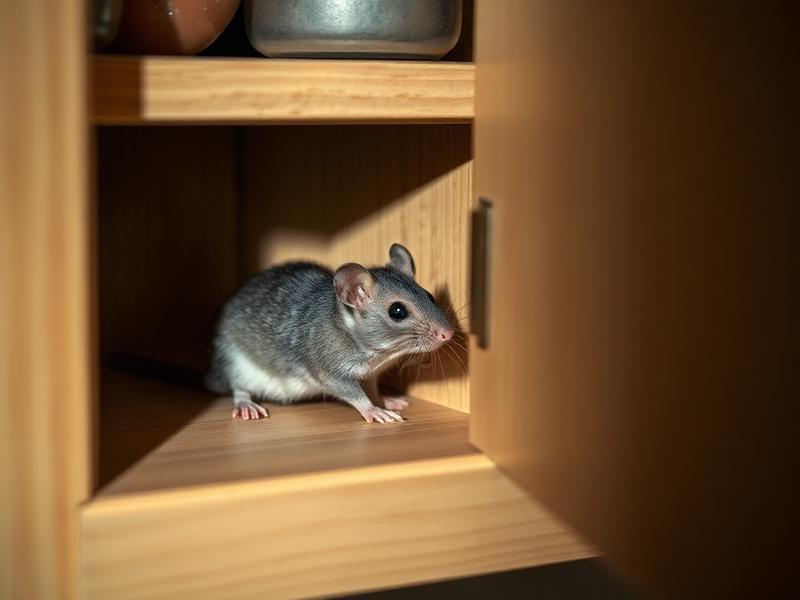
Identifying house mice
The house mouse is small, with relatively large ears, a pointed snout and a thin tail. Its fur is usually grey-brown. A shrew has a noticeably more pointed snout and is an insectivore, not a rodent.
Rustling alone does not prove a mouse problem. Look for several signs and record where and when you find them.
Where do mice live, and what signs do they leave?
Stored supplies, cavities behind kitchen cabinets and pipe penetrations provide food or shelter. Droppings, gnaw marks and damaged packaging warrant further investigation. A single sighting does not indicate how many animals are present.
Also check the outside of the building: gaps around doors and pipes can provide access. Photograph signs before cleaning.
What can you safely do yourself?
Store food and animal feed in sturdy, sealed containers. Clear away crumbs and waste, and check entry routes. Have structural defects repaired without blocking ventilation openings.
Do not touch droppings with bare hands. Avoid stirring up dust from droppings; follow reliable cleaning guidance. Do not use poison at your own discretion. If signs recur, have the species, source and appropriate approach assessed.
Frequently asked questions
Sources and further information
General information, not a diagnosis for your location. Have the species identified if in doubt. Consult a healthcare professional about health symptoms and do not use pesticides without appropriate instructions.
Further reading
Help for your business
RBL Services helps business clients in Noord-Holland, Utrecht, Zuid-Holland and Flevoland. Discuss an inspection for your business premises, kitchen, production site or homeowners’ association.
Business pest management →